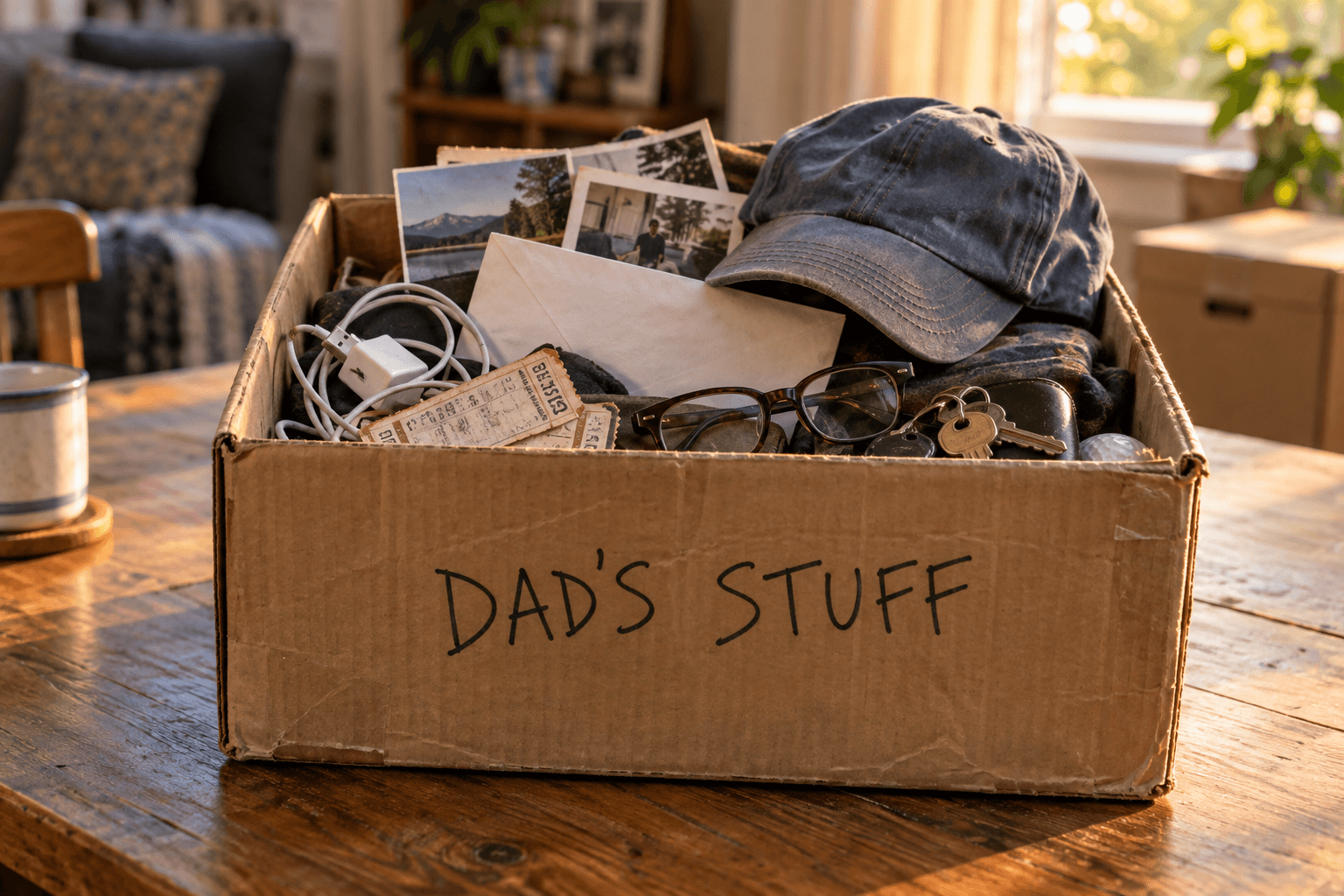
Why I Call It Loving Legacy

Sometimes when we hear the word legacy, we think it has to be something grand: something with your name engraved on it, something people will still be talking about a hundred years from now. I don’t think that’s how legacy usually works.
I think legacy is much quieter than that. Legacy is what remains of us in other people.
It’s the expression your son uses that sounds remarkably like you, even though he spent his teenage years promising he would never become you. It’s a recipe written on a card, stained from years of sitting beside the mixing bowl. It’s the way someone remembers to call, pulls up an extra chair, or knows how to sit beside a grieving friend because you once showed them how.
“We leave a legacy through the way we love people while we’re here, and through the care we take now for the day we won’t be.”
Most of us will leave behind a few things that someone will eventually have to sort through. Some of us are apparently determined to make that a much larger project than necessary. But we also leave habits, stories, laughter, and ways of loving that become part of other people’s lives.
After more than five hundred funerals, I’ve heard a lot about what remains. Families tell me who answered the phone, who made every ballgame, who could make an ordinary day feel like an occasion. They remember the person who was stubborn, generous, occasionally infuriating, and loved beyond measure. Someone will say, “You knew you could count on her,” and everyone around the table will nod.
Those are the things I’m thinking about when I use the word legacy.
There is another part of it that I’ve come to care about deeply, because those same families have practical questions to answer while they are grieving. What did their loved one want? Where are the papers? Was anything arranged? How are they going to pay for this?
The questions arrive quickly, sometimes before everyone has made it home, sometimes while someone is still trying to find the words to tell a grandchild what happened. Grief can make choosing a shirt feel like too much, and suddenly a family is being asked to make decisions they may never have discussed.
We cannot spare the people we love the sadness of losing us. I wish we could. But there are some questions we can answer for them now, and some burdens we can help ease.
We leave a legacy through the way we love people while we’re here, and through the care we take now for the day we won’t be.
That’s why I call this part of my work Loving Legacy.
For years, as a pastor and now as a celebrant, I’ve seen how much it matters when a family knows what their loved one wanted, and how heavy the uncertainty can be when nobody knows where to begin. That experience comes with me into my work helping people prepare for final expenses, because I’m always thinking about the person who will be sitting at that table, trying to figure out what happens next.
Sometimes preparing means talking about insurance. Sometimes it means writing down your wishes, gathering important documents, or telling someone where the folder is. A beautifully organized folder remains something of a mystery if you are the only person who knows it exists.
And sometimes the first step is simply saying, “There’s something I’d like us to talk about.”
These conversations can feel awkward. We may worry that bringing up death will spoil a perfectly good afternoon. We may assume there will be a better time, perhaps one when everyone is relaxed, available, and eager to discuss funeral arrangements. I have yet to meet that afternoon.
But a conversation now can become a kindness someone remembers later. They may be grateful that they knew your wishes, that they could find what they needed, or that you had thought about the expense. In the middle of missing you, they may recognize one more way you took care of them.
That kind of legacy is within reach of ordinary people with ordinary lives. It grows through years of showing up, and it can include a few thoughtful preparations for the day we can no longer be there.
I hope the people I love will have plenty of stories to tell about me. I’m reasonably certain some will require an explanation, and a few may need editing before the grandchildren hear them. But I also hope that, somewhere in the middle of those stories and all that comes next, they will find evidence that I thought about them.
That I knew there would be a hard day. And that I did what I could, while I could, to leave them a little peace.
If you’ve been meaning to have that conversation and aren’t sure where to start, I’d be glad to sit down with you. We can talk through your wishes, what’s already in place, and what might help the people you love on that hard day, with no pressure and at whatever pace feels right.
Publish Tomorrow 8:15 am Category Loving Legacy