Trust the Web

Not All Altars are Made of Stone

I have reached the age where I watch superhero movies differently than I used to.


Don't get me wrong. I still enjoy the explosions, the impossible stunts, and the inevitable scene where New York is somehow once again hanging by a thread. But somewhere along the way I've become the guy who walks out of the theater thinking less about the villain and more about what the story says about being human.


That happened again after watching the new Spider-Man movie, Brand New Day.


As I thought about the movie, I found myself wondering what Spider-Man's greatest invention really is.


At first, I thought it was the suit. It is definitely iconic, but I remembered his best suit wasn't even his own invention. That one? It was designed, built and provided by Tony Stark. So maybe it's his strength, except there are plenty of superheroes who are stronger. Or perhaps it's the ability to swing effortlessly between skyscrapers.


As amazing as all of that is, I don't think it's his greatest gift.


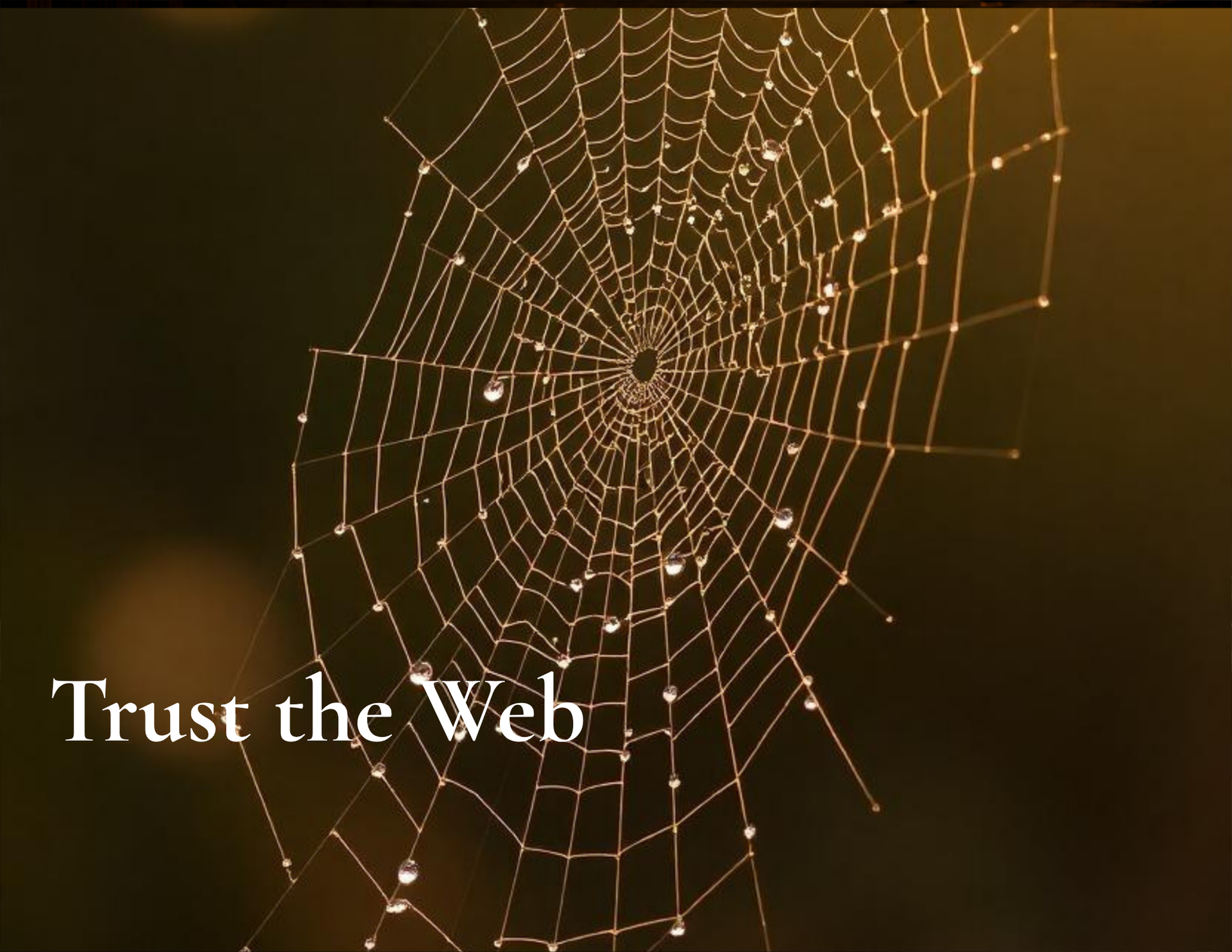
No, for me, the best, greatest, and yes, maybe even the holiest thing Spider-Man does has always been about the web.


A single strand of a spider's web is almost nothing. You can brush it away with the back of your hand and never think twice about it. But strand after strand, woven together with patience and intention, becomes something remarkably strong.


Maybe the web was never just a clever way for Spider-Man to get around the city. Maybe it was always pointing toward something truer about the way life actually works.


Isn't it interesting? Spider-Man doesn't fly. Superman flies. Iron Man flies. Captain Marvel flies. Spider-Man can't. Every single movement forward depends on attaching himself to something outside himself.


The more I thought about that, the more I wondered if the web isn't really a superpower at all. Maybe it's simply a picture of what it means to be human.


For a long time, Spider-Man tries to carry everything by himself. He keeps people at a distance, convinced that if he just works a little harder, sacrifices a little more, holds on a little tighter, he can protect everyone he loves. It's a noble instinct. It's also an exhausting one.


Eventually he learns what most of us spend a lifetime learning. There are some battles you simply cannot fight alone.


Most of us have been taught that the strong life is the independent life. We admire the person who never asks for help, never leans on anyone else, never lets the world see them struggle. We confuse self-sufficiency with maturity.


But that's not how Spider-Man survives. Even with all his strength, every swing depends on being connected to something beyond himself.


Notice what the web is actually for. Yes, it blocks a punch. It disarms a villain. It restrains someone twice his size. But its quietest work is something else entirely. It keeps him connected to something solid when he has nothing else to stand on. And just as often, it's the thing that catches someone else before they hit the ground.


Once I saw it, I couldn't stop seeing it. I've seen the web in hospital waiting rooms. I've seen it around kitchen tables after someone dies. I've seen it in churches, neighborhoods, baseball dugouts, recovery groups, and around backyard grills.


And I've certainly seen it in the hundreds of funerals I've had the privilege to lead. I've never watched a family survive the hardest day of their lives because one person was exceptionally strong. They survived because someone brought dinner. Someone answered the phone. Someone took the kids for the afternoon. Someone sat in silence. Someone refused to let them grieve alone.


That's what held them.


We spend years weaving these webs without thinking very much about them. Then one day life asks them to hold our whole weight. That's when I realized something.


Not all altars are made of stone. Some are woven.


Maybe that's the Unlikely Altar. It's not the skyscrapers or the mask. It's not even the superhero. The Unlikely Altar is the web the ordinary, almost invisible network of relationships that catches us when we fall, steadies us when we lose our footing, and quietly reminds us that none of us was ever meant to swing through life alone.


Maybe that's the whole sermon, if you can call it that: Trust the web.


And whenever you can, become part of someone else's.

By What a Nearly Empty Theater Taught Me July 23, 2026
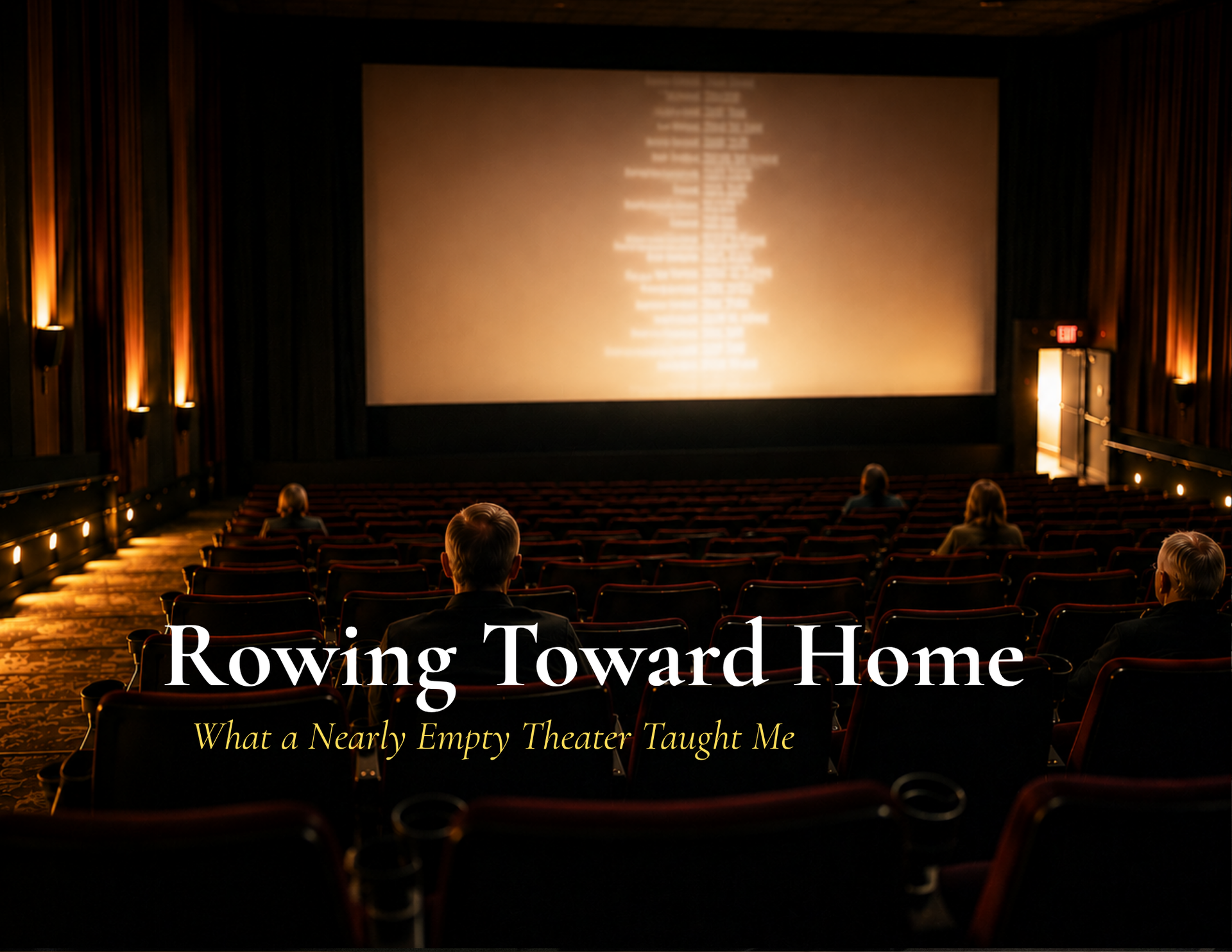
The only ticket I could get to watch The Odyssey was for an 8:00 showing on a Sunday morning. I walked into a theater that seats at least a couple of hundred people, and for a time I had the place to myself. Eventually, I counted about 8 of us in that theater. I guess most of the city was either sleeping or getting dressed for church. As the credits rolled, I had a revelation that made me chuckle. I thought I was skipping church, but what I discovered was something different. I didn’t skip church at all; I was simply sitting in a different sanctuary. You see, the movie's message was similar to the one I had preached for some 30 years as a United Methodist pastor. Somewhere between the gods and monsters, the storms and shipwrecks, and one weary man rowing across a dark sea, something clicked. The Odyssey isn't really a story about a war. It isn't even a story about a voyage. It's a story about a man who wants to go home. Amazing! A story that has survived for nearly three thousand years is built around one of the simplest longings we know. Odysseus has already tasted glory, and it cost him almost everything. He doesn't want another victory. He wants his house, his wife, his son and his dog. He wants to lay his head on the pillow in his own bed. More than anything else, he wants to stop being away. He simply wants to go home. As I sat there, another thought surfaced. Christopher Nolan seems to tell this same story over and over again. In Interstellar , Cooper crosses galaxies trying to find his way back to his children. In Inception , Cobb cannot go home until he faces the guilt he's spent years outrunning. Bruce Wayne eventually discovers that saving Gotham isn't enough if he never learns how to live as Bruce Wayne. Even Oppenheimer becomes the story of a man who creates something so world-changing that he can never truly return to the person he once was. Different men and different genres of movies, but all with the same ache and yearning. Which made me wonder if this homesickness isn't really about geography at all. Maybe it's the oldest ache we carry. Maybe underneath our ambition, our fear, our success, our failures, and even our regrets lives one quiet prayer. I want to go home. However we define it. Whatever it costs to get there. This longing, this ache doesn't just show up in movie theaters. It shows up everywhere people tell stories, including some of the oldest ones we have. There's a scene early in the Exodus story where a fugitive named Moses, a man who has been running for decades, hides out as a shepherd in the middle of nowhere. One day, he comes across a bush that's burning without burning up. A voice tells him to take off his sandals. Most sermons I've heard focus on the holiness of the ground, and I think that's certainly part of the story. But I also wonder if something else is happening too. Think about what we do when we finally get home. We take off our shoes. We stop looking over our shoulder. We rest. We breathe. Maybe, after years of running, Moses wasn't just standing on holy ground. Maybe he was finally home. That raises a question that's been following me ever since I left the theater. What is home? For some of us, home is another person. Maybe it's a relationship that needs tending, or a conversation that has waited too long. Maybe it's reconciliation. Or maybe it's making peace with the fact that reconciliation will never happen this side of heaven. For others, home is something deeper than any single relationship. It's the quiet conviction that our lives were made for something, or perhaps Someone, greater than ourselves. As a celebrant, I've sat with hundreds of families after someone they loved has died. It's remarkable what they remember. They don't tell stories about promotions or investment accounts. They remember kitchen tables. Fishing trips. The old recliner nobody else was allowed to sit in. Saturday mornings making pancakes. The sound of someone's laugh coming from another room. In other words, they remember home. Not because of the house. Because of the belonging. Maybe that's the ache hiding underneath all our other aches. We chase it in careers, hoping the next promotion will finally quiet the restlessness. We chase it in relationships, believing the right person can answer every question we carry. We chase it in bigger houses, as though more square footage could somehow create belonging. And every once in a while, if we're honest, we chase it in stories. We sit in dark rooms and watch a man row across a sea for ten years, or a father claw his way through time toward a little girl's bedroom, or a fugitive stumble onto a bush that won't stop burning — and something in us leans forward, because some part of us recognizes the ache. We've felt it too. I didn't go looking for any of this. I just wanted to see a movie by my favorite director. But that's usually how it goes, isn't it? The sacred rarely makes an appointment. It doesn't wait for a sanctuary with stained glass and a bulletin. Sometimes it just shows up in a mostly empty theater at 8:00 on a Sunday morning, hiding inside a three-thousand-year-old poem about a man rowing toward home. An Unlikely Altar, if there ever was one.
By Every Story Leaves Someone Behind June 30, 2026
There's someone I think about almost every time I pick up the phone. I don't know her. I've never met her. But she's out there somewhere, waiting in a future neither of us can see. Let's call her Susan . Susan might be your spouse. Your son or daughter. Your sister, your nephew, your best friend, or the neighbor who's always been more like family than family. She might not even be the person you'd name today. Life has a way of deciding those things for us. Whoever she is, she'll be standing in the room when the worst day comes. And it will come. Not because I'm trying to be grim about it, just because that's the deal every one of us signed up for the day we were born. None of us get out of here without leaving someone behind to clean up after we're gone. So pause for just a moment and picture her. It's the morning after you've died. The casseroles haven't arrived yet, and neither have the flowers. The phone won't stop ringing, and sleep, well, that's been impossible. Every conversation feels unreal. Then comes the call to the funeral home. Does she even know which funeral home to call? Does she know what you wanted? Burial or cremation? A church service? What music did you want played? Does she know where your important papers are? Then comes the question few people are truly ready for: "How will you be taking care of the funeral expenses?" Susan wasn't expecting that question quite so soon. And when someone asks that question, does she already have an answer? Or does she begin making phone calls she never wanted to make, hoping someone in the family can somehow pull everything together? I've seen that with more families than I can count, both as a pastor and as a celebrant. And it's not because families don't love each other. It's because nobody got around to it. After all, death always feels like a someday problem until it's a today problem, and by then it's Susan's problem, not yours. That's why I do what I do today. I still stand with families after a death as a celebrant. I also help them prepare before that day ever comes. Can I tell you something I don't say very often? Selling insurance was never part of my plan. For most of my life, I've met families after someone died. I've stood beside hospital beds, in funeral homes, and at gravesides. I've listened to stories, held hands, and tried to help people find solid ground when their world had just been turned upside down. This work came later, and if I'm honest, there are still days it feels like an odd fit. Not because I don't believe in what a policy can do, but because I'm afraid of becoming someone who sounds more interested in making a sale than helping a family. For a while, that fear got the better of me. I'd call people who had asked for information, and many never answered. Some insisted they hadn't filled out a form. A few cussed me out and hung up before I could even introduce myself. After enough of those conversations, I started wondering if anyone really wanted to hear from me. So I pretty much stopped calling. I told myself I'd get back to it eventually. Then I did a funeral. The family hadn't planned for any of it, and by the time I sat down with them, they were already scrambling to cover the cost. Thank God, the funeral home was willing to work with the family so they could move forward. As I listened to that family share their story, I realized something. When I pick up the phone, it isn't really about insurance. It never had been. It was about that family. It is about every daughter, every son, every husband, every wife, every friend who finds themselves sitting at a kitchen table trying to solve a financial problem while their heart is breaking. That's when I understood why I needed to pick up the phone again. The people who hang up on me aren't really the reason I call. The reason I call is the one person who answers. The one conversation that happens before a crisis rather than during one. The one family that gets to spend its energy remembering someone they love instead of wondering how they'll pay for saying goodbye. That's worth every unanswered call. So if your phone rings and you see my name, I hope you'll know something. I'm not calling because I see you as a policy. I'm calling because I've met your Susan. I may not know her name, but I know she'll be there. I'd rather have an awkward conversation today than watch someone you love carry a burden you could have lifted. Grief is heavy enough. Love can't stop death, but love can make sure the people left behind don't have to carry everything alone. So before we ever talk about insurance, here's the only question that really matters: Who's your Susan? Find that person. Picture their face. Then ask yourself, "If today were the day everything changed, would they be okay?" Not okay because they wouldn't miss you. They will. Not okay because they wouldn't grieve. They will. But okay because, in the middle of the hardest week of their life, they would know that one of your final acts of love was making sure they weren't left to figure it all out alone. That's what I believe this work is really about. Helping people love well, even after they're gone. After all, every story leaves someone behind.
By On Two Worlds, a Revolution, and the Cost of Joining It June 10, 2026
Throughout the pages of Scripture, two worlds run alongside each other like parallel tracks that never quite meet. There is the world that exists. The one we wake up in every morning. The one where the poor in spirit are overlooked, where those who mourn are told to move on, where the meek get pushed aside and the hungry stay hungry and mercy is rationed out to the people who deserve it. This is the world most of us have learned to navigate, the one we have made our peace with, the one we have quietly decided is simply the way things are. And then there is the world God desires. The world that was always meant to be. The one where the last are first and the broken are held and the overlooked are seen and the hungry are filled and mercy flows without a ledger. The world where shalom — that untranslatable Hebrew wholeness — is not a distant hope but the actual texture of daily life. Jesus sat down on a hillside and spent eight statements describing that second world. And then He preached a sermon that turned the first one upside down and inside out. We have been sitting on that hillside together for a while now. Seven posts and seven altars along with seven announcements of a world that God desires. And now Jesus says — it will cost you . Blessed are those who are persecuted for righteousness, for theirs is the kingdom of heaven. This is the last beatitude. And it is the only one that comes with a warning. Everything before this has been an announcement and an invitation. Come as you are. Drop the mask. Show mercy. Make peace. Be a thermostat. The kingdom of God is breaking into the world, and you are invited to be part of it. But now Jesus looks at that crowd — that tired, hoping, half-believing crowd — and tells them the truth about what joining this revolution actually costs. Because it is a revolution. You don't begin a revolution with warm and fuzzy words. The writers of the Declaration of Independence pledged their lives, their fortunes, and their sacred honor. Jesus is asking for something in the same territory. Now for most of us the cost will not be physical. We are not the countless men and women around the world who are beaten, imprisoned or killed for the name they carry. Their courage is in a category that humbles everything else. But Jesus is also talking to ordinary people living ordinary lives in ordinary places. And He is telling us that when we start living the beatitudes — when we show favor to the overlooked, when we invite the marginalized in, when we practice mercy and purity and peace — we will pay a price. Maybe not with our bodies. But with our comfort. or our status or our carefully managed reputations. We might get pushed to the margins ourselves. We might get passed over and excluded. And Jesus says — "Blessed! I am still on your side. I will meet you there." Last June I posted blogs about Pride Month. I did so because I believed they needed to be posted. I believe in the dignity of my friends in the LGBTQ community. I believe they have a place at the table. I believe that when Jesus looked at that hillside full of people the religious system had pushed to the margins, He was looking at them too. I posted. And then the negative hateful comments came. And I went quiet. I convinced myself I was avoiding conflict. I told myself it wasn't the right moment. I told myself a lot of things that sounded reasonable in the moment and hollow in the days that followed. The truth is simpler and less flattering than any of that. I calculated the cost. And I decided it was too high. I was a thermometer. I adjusted to the temperature of the room instead of setting it. And the people I care about — the ones who had every reason to expect me to stay loud — watched me go silent. To my friends in the LGBTQ community — I am sorry. You deserved better from me. You deserved someone who meant it all the way through, not just when it was easy. The silence was a failure and I own it. I don't say that to make this post about me. I say it because this beatitude will not let me off the hook. And here is what Jesus says to do when the cost arrives, which is the part that has stayed with me longer than anything else in this entire series of beatitudes. He says rejoice and be glad. And here is the Unlikely Altar for this last one, and it is different from every altar we have visited in this series, because it is not a place you can photograph or a moment that happens to you while you are standing at a gas station or sitting at a graveside or watching a baseball game. It is something you do. It is the comment you type and actually post when the easier thing would be to scroll past. It is the moment in a meeting when something wrong is happening and you are the one who says so, knowing full well what it will cost you before the words are even out of your mouth. It is the June when you stay loud after the pushback comes instead of going quiet and telling yourself reasonable-sounding things that feel hollow three days later. That moment, ordinary and unremarkable, probably witnessed by nobody who would think to circle it on a calendar and call it holy, is exactly where the world God desires breaks into the world that exists. That is the revolution Jesus started on a hillside when He began calling the wrong people blessed. And He is still looking for ordinary people who want to join it, not the brave ones and the heroic ones and the ones who have already figured out how to make it look easy, but the ordinary ones who calculate the cost and decide to pay it anyway, even when they have failed to pay it before, even when the silence is still fresh enough to sting. The kingdom is closer than you think. Sometimes it looks like a bench. Sometimes a grave. Sometimes a bunt in the ninth inning, a bag of cold fries, a cheering section full of strangers, a mask finally laid down, or a box of ashes sitting quietly in a closet. And sometimes it looks like an ordinary person deciding that grace is worth the cost. May we know, may we remember, may we never forget — the God who announced grace to the overlooked, who stood at the grave and said I am with you, who cheered the names of the forgotten, who loved the face beneath the mask, who kept moving toward the ones who kept saying no — that God is on your side when the room goes cold and the cost turns out to be real and the leap feels more like a stumble than anything graceful.
FIND OUT MORE ABOUT THE BLOGS