
Unlikely Altars
Where the Sacred Hides in Plain Sight
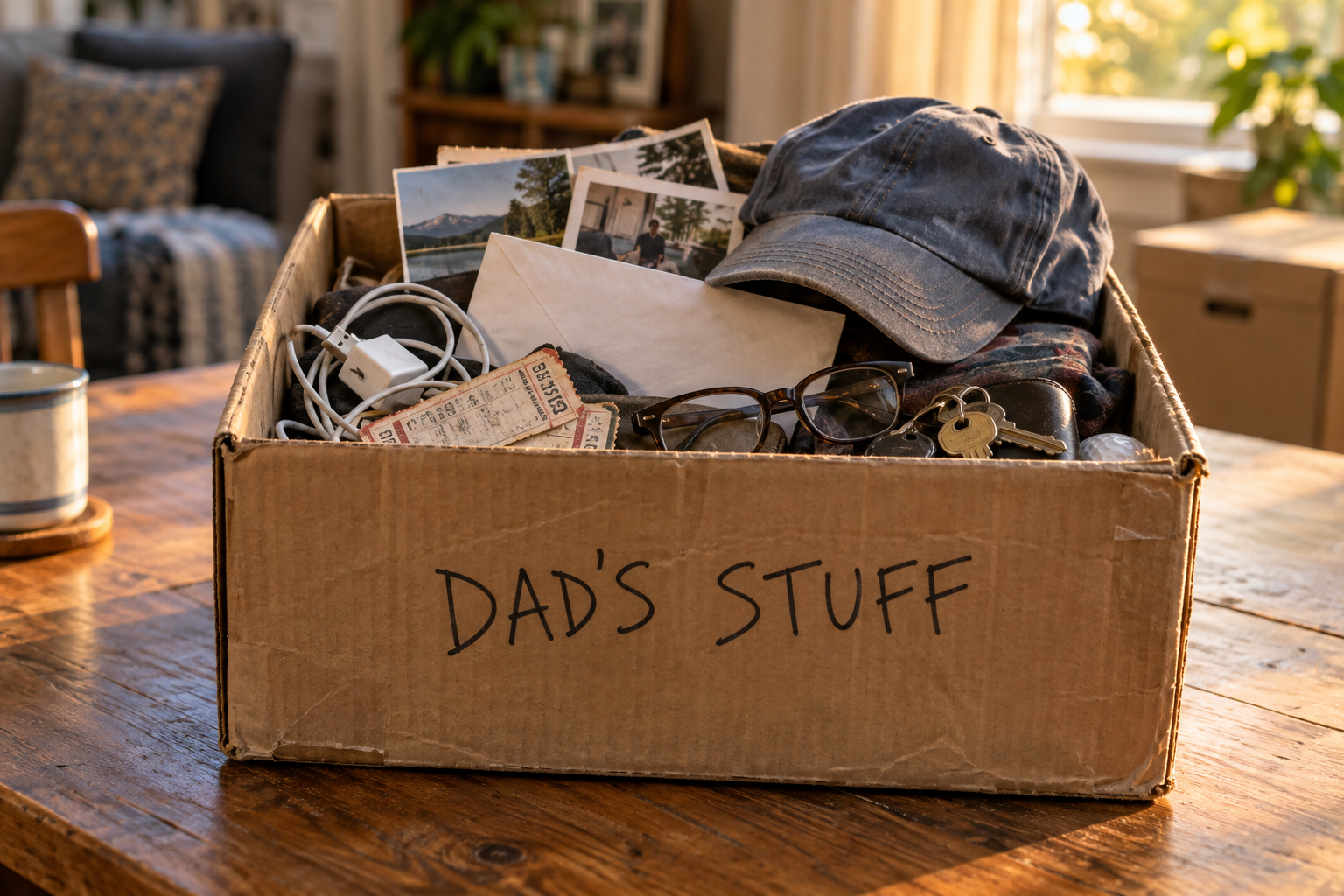
Someday after I die, my sons are going to have to go through my stuff, and I have to admit that I find this thought both amusing and a little terrifying. Not because I'm hiding anything particularly scandalous, or at least nothing they'll be able to prove, but because I know how much stuff I've accumulated over the years that makes perfect sense to me and will make absolutely no sense to them. I can already picture it. One of them will open a drawer, pull out some completely inexplicable object and ask the other, “Do you have any idea why Dad kept this?” The answer will almost certainly be no. Eventually somebody will say, “We probably shouldn't throw it away,” and into a box it will go. That box will be labeled DAD'S STUFF and moved from closet to closet for the next twenty years because apparently one of the things we inherit from the people we love is the inability to throw away their weird crap. That's funny when we're talking about old ticket stubs, charging cables, or whatever other treasures my children someday discover. It becomes considerably less funny when the thing they're trying to find is an insurance policy, a bank account, an important password or the answer to a very simple question: What did Dad want us to do? I've spent enough time around death to know that dying leaves behind more than grief. It leaves behind an astonishing amount of administrative work, and unfortunately the electric company, Netflix and the HOA don't receive some cosmic notification that says, “Marty died Tuesday, please stop sending him bills.” The financial machinery of a person's life keeps humming along until somebody who is very much alive starts shutting it down. That's something we don't talk about much when we talk about “final expenses.” We usually mean the funeral, and certainly that's part of it, but the funeral isn't the only bill that survives us. There is a strange stretch of time between someone's death and the moment their financial life finally comes to rest, and somebody has to live through that stretch. Usually, that somebody is a person who loved us, and they're doing all of this while grieving. They may be planning a funeral while trying to figure out whether the mortgage has been paid, which bills are automatically drafted, how long the electricity needs to stay on and what accounts need to be closed. Someone may have to miss work or travel. There may be a car to sell, subscriptions to cancel or a dog that suddenly needs somewhere to live. I've seen enough grief to know what it can do to an otherwise perfectly capable person. People forget things. They read the same piece of paper three times and still aren't sure what it says. They can make a dozen decisions at the funeral home and then become completely overwhelmed deciding what everybody should eat for dinner. Yet right in the middle of all that, we sometimes leave them a scavenger hunt. Where's the will? Did Mom have insurance? Who's the beneficiary? Where does Dad bank? What's the password? And eventually, “ Why in God's name was he still paying $14.99 a month for this?” The more I think about it, the more I wonder whether planning for our death is less about having everything perfectly arranged and more about simply leaving fewer questions. Most of us aren't going to leave behind a beautifully organized binder with labeled tabs containing everything our family could possibly need. If you have one of those, congratulations. I admire you and also find you slightly suspicious. The rest of us can at least tell someone where the important things are, what we've already arranged and what we want done. And if we have life insurance, perhaps we should make sure the person we've named as beneficiary actually knows the policy exists. That's also why I've started thinking differently about final expense insurance. Yes, it can provide money for a funeral or cremation, but it can also provide something less obvious: a little financial breathing room during that strange period when someone is grieving you while simultaneously trying to wind down the life you left behind. It isn't supposed to turn someone's death into a payday, nor does everybody need a huge policy. It’s simply money that’s there when the person you chose as your beneficiary needs it, without you having to predict which expense is going to arrive first. Maybe “final expense” is actually a misleading name because death doesn't come with one final expense neatly printed at the bottom of a receipt. It comes with bills, responsibilities, decisions and questions, and eventually the people who love us have to sort through all of them. Someday my sons really will go through my stuff. They'll throw some of it away, keep some of it and probably find a few things that make them wonder what exactly was wrong with their father. I hope they laugh. I hope they find things that bring back stories and, for a moment, bring me back into the room with them. But here's what I don't want. I don't want what I leave behind to become something they have to carry. I can't spare them the grief of losing their father someday. There isn't an insurance policy in the world that can do that. But I can leave fewer questions, make a few decisions now instead of leaving those decisions to them and provide some financial breathing room for whatever that day brings. Maybe that's what a loving legacy looks like. We can't make death easy for the people we love, but we can try to make what comes after it a little easier. Because death doesn't cancel autopay. But love can plan ahead.

I went to see the new Spider-Man movie, got myself tangled up in thoughts about webs, connection, and our rather inconvenient need for other people, and decided I had found the Unlikely Altar . I even wrote about it in my last blog, Trust the Web . I figured I was done with Spider-Man . But I guess Spider-Man wasn't done with me. One day as I was driving home from a funeral home, I heard something that made me think about the movie all over again. I was listening to a podcast, The Big Picture, and one of the hosts, Amanda , said something almost in passing. She said the real villain of the Spider-Man movie was loneliness . The other hosts didn't really acknowledge it and the conversation moved on. But I couldn't shake it. The more I thought about it, the more I wondered if she had seen something hiding in plain sight; something that I might have missed. The trailer tells us that Spider-Man is up against " a powerful villain no one can even see. " Maybe that's not just a clue about the movie's mystery. Maybe it's the movie's deepest truth. Because loneliness was everywhere in the story. It was there every time Peter Parker walked past someone who used to know him and didn't get so much as a second glance. It was there when he sat alone in an apartment that used to be full of people. It was there in the quiet, unglamorous fact that the world had simply moved on without him. Nobody made a big deal about it. Because that's not how loneliness usually works. It doesn't announce itself, instead it just keeps piling on. It is that way in this movie and it is that way in real life. The strange thing about loneliness is that there isn't just one way it finds us. Sometimes it finds us when someone dies. Sometimes a marriage ends, or a friendship that once seemed permanent quietly disappears. And sometimes nothing dramatic happens at all. We're just lonely. I mentioned this idea for the blog to a good friend of mine, and his response stopped me. His mother recently lost her husband and now lives with him and his family. She isn't alone. There are people in the house who love her. There are meals and conversations and all the ordinary movement of family life around her. But her world has been getting smaller. Her husband is gone. She can no longer drive. Friends who once called or texted don't seem to anymore. "Mom is experiencing that now," he told me. "Even with us around." And then he said something I haven't been able to forget. "I see it every day." Maybe that's what we misunderstand about loneliness. We sometimes treat it like a math problem. Put enough people in the room and loneliness should disappear. But it doesn't work that way. Sometimes you can be deeply loved and still deeply lonely. What you miss isn't " people " - - you miss a particular person, a particular life. The one who knew how you took your coffee. The familiar voice from the other room. The freedom to get in the car and go somewhere, the job where people knew your name, the routines you never realized were holding your world together until they were gone. Maybe loneliness isn't always an empty room. Sometimes it's the empty spaces left inside a life that is still very much full of people. I've seen that kind of loneliness in my work. I've seen it at funerals where a widow or widower is surrounded by a room full of people who genuinely love them, while knowing that eventually everyone will go home. And so will they. Except they will go home without the one person they desperately wish were going with them. I know something about that kind of loneliness too. Chances are, you have too. Sometimes it lasts an evening and then there are times when it lasts much longer. Sometimes we know exactly why it's there, and sometimes we couldn't explain it if we tried. We can be lonely in an empty house. We can also be lonely at a crowded table. Maybe that's why loneliness makes such a good villain. It doesn't need a mask . It hides in the quiet apartment, the empty side of the bed, the phone call you don't make anymore. Nobody claps when it's defeated because most of the time nobody else even knew it was there. And I don't think Spider-Man ever really beats it. Not for good. But then I'm not sure any of us do. Maybe that's because loneliness isn't always something to be defeated. Sometimes there is no fixing the empty side of the bed. No replacing the person who knew how you took your coffee. No giving someone back the life they had before the world changed. Maybe, for now, the point is simply to notice. Not because noticing leads somewhere, not because it's the first step toward fixing anything. It doesn't solve the math. Counting heads in a room never made anyone less lonely, and neither will counting the people who noticed. Noticing isn't a means to an end here — it's the whole point. That's the Unlikely Altar this time. Not the web itself, but the moment somebody stops and sees the person standing in it, caught, and says so out loud. Amanda, catching it in a sentence almost nobody else heard. My friend, seeing it in his mother every day, in a house full of people who love her. Somebody, once, seeing it in me. Maybe that's how we keep weaving the web. Not by making loneliness disappear. By making sure the lonely don't disappear with it.

I have reached the age where I watch superhero movies differently than I used to. Don't get me wrong. I still enjoy the explosions, the impossible stunts, and the inevitable scene where New York is somehow once again hanging by a thread. But somewhere along the way I've become the guy who walks out of the theater thinking less about the villain and more about what the story says about being human. That happened again after watching the new Spider-Man movie, Brand New Day. As I thought about the movie, I found myself wondering what Spider-Man's greatest invention really is. At first, I thought it was the suit. It is definitely iconic, but I remembered his best suit wasn't even his own invention. That one? It was designed, built and provided by Tony Stark. So maybe it's his strength, except there are plenty of superheroes who are stronger. Or perhaps it's the ability to swing effortlessly between skyscrapers. As amazing as all of that is, I don't think it's his greatest gift. No, for me, the best, greatest, and yes, maybe even the holiest thing Spider-Man does has always been about the web. A single strand of a spider's web is almost nothing. You can brush it away with the back of your hand and never think twice about it. But strand after strand, woven together with patience and intention, becomes something remarkably strong. Maybe the web was never just a clever way for Spider-Man to get around the city. Maybe it was always pointing toward something truer about the way life actually works. Isn't it interesting? Spider-Man doesn't fly. Superman flies. Iron Man flies. Captain Marvel flies. Spider-Man can't. Every single movement forward depends on attaching himself to something outside himself. The more I thought about that, the more I wondered if the web isn't really a superpower at all. Maybe it's simply a picture of what it means to be human. For a long time, Spider-Man tries to carry everything by himself. He keeps people at a distance, convinced that if he just works a little harder, sacrifices a little more, holds on a little tighter, he can protect everyone he loves. It's a noble instinct. It's also an exhausting one. Eventually he learns what most of us spend a lifetime learning. There are some battles you simply cannot fight alone. Most of us have been taught that the strong life is the independent life. We admire the person who never asks for help, never leans on anyone else, never lets the world see them struggle. We confuse self-sufficiency with maturity. But that's not how Spider-Man survives. Even with all his strength, every swing depends on being connected to something beyond himself. Notice what the web is actually for. Yes, it blocks a punch. It disarms a villain. It restrains someone twice his size. But its quietest work is something else entirely. It keeps him connected to something solid when he has nothing else to stand on. And just as often, it's the thing that catches someone else before they hit the ground. Once I saw it, I couldn't stop seeing it. I've seen the web in hospital waiting rooms. I've seen it around kitchen tables after someone dies. I've seen it in churches, neighborhoods, baseball dugouts, recovery groups, and around backyard grills. And I've certainly seen it in the hundreds of funerals I've had the privilege to lead. I've never watched a family survive the hardest day of their lives because one person was exceptionally strong. They survived because someone brought dinner. Someone answered the phone. Someone took the kids for the afternoon. Someone sat in silence. Someone refused to let them grieve alone. That's what held them. We spend years weaving these webs without thinking very much about them. Then one day life asks them to hold our whole weight. That's when I realized something. Not all altars are made of stone. Some are woven. Maybe that's the Unlikely Altar. It's not the skyscrapers or the mask. It's not even the superhero. The Unlikely Altar is the web — the ordinary, almost invisible network of relationships that catches us when we fall, steadies us when we lose our footing, and quietly reminds us that none of us was ever meant to swing through life alone. Maybe that's the whole sermon, if you can call it that: Trust the web. And whenever you can, become part of someone else's.

The only ticket I could get to watch The Odyssey was for an 8:00 showing on a Sunday morning. I walked into a theater that seats at least a couple of hundred people, and for a time I had the place to myself. Eventually, I counted about 8 of us in that theater. I guess most of the city was either sleeping or getting dressed for church. As the credits rolled, I had a revelation that made me chuckle. I thought I was skipping church, but what I discovered was something different. I didn’t skip church at all; I was simply sitting in a different sanctuary. You see, the movie's message was similar to the one I had preached for some 30 years as a United Methodist pastor. Somewhere between the gods and monsters, the storms and shipwrecks, and one weary man rowing across a dark sea, something clicked. The Odyssey isn't really a story about a war. It isn't even a story about a voyage. It's a story about a man who wants to go home. Amazing! A story that has survived for nearly three thousand years is built around one of the simplest longings we know. Odysseus has already tasted glory, and it cost him almost everything. He doesn't want another victory. He wants his house, his wife, his son and his dog. He wants to lay his head on the pillow in his own bed. More than anything else, he wants to stop being away. He simply wants to go home. As I sat there, another thought surfaced. Christopher Nolan seems to tell this same story over and over again. In Interstellar , Cooper crosses galaxies trying to find his way back to his children. In Inception , Cobb cannot go home until he faces the guilt he's spent years outrunning. Bruce Wayne eventually discovers that saving Gotham isn't enough if he never learns how to live as Bruce Wayne. Even Oppenheimer becomes the story of a man who creates something so world-changing that he can never truly return to the person he once was. Different men and different genres of movies, but all with the same ache and yearning. Which made me wonder if this homesickness isn't really about geography at all. Maybe it's the oldest ache we carry. Maybe underneath our ambition, our fear, our success, our failures, and even our regrets lives one quiet prayer. I want to go home. However we define it. Whatever it costs to get there. This longing, this ache doesn't just show up in movie theaters. It shows up everywhere people tell stories, including some of the oldest ones we have. There's a scene early in the Exodus story where a fugitive named Moses, a man who has been running for decades, hides out as a shepherd in the middle of nowhere. One day, he comes across a bush that's burning without burning up. A voice tells him to take off his sandals. Most sermons I've heard focus on the holiness of the ground, and I think that's certainly part of the story. But I also wonder if something else is happening too. Think about what we do when we finally get home. We take off our shoes. We stop looking over our shoulder. We rest. We breathe. Maybe, after years of running, Moses wasn't just standing on holy ground. Maybe he was finally home. That raises a question that's been following me ever since I left the theater. What is home? For some of us, home is another person. Maybe it's a relationship that needs tending, or a conversation that has waited too long. Maybe it's reconciliation. Or maybe it's making peace with the fact that reconciliation will never happen this side of heaven. For others, home is something deeper than any single relationship. It's the quiet conviction that our lives were made for something, or perhaps Someone, greater than ourselves. As a celebrant, I've sat with hundreds of families after someone they loved has died. It's remarkable what they remember. They don't tell stories about promotions or investment accounts. They remember kitchen tables. Fishing trips. The old recliner nobody else was allowed to sit in. Saturday mornings making pancakes. The sound of someone's laugh coming from another room. In other words, they remember home. Not because of the house. Because of the belonging. Maybe that's the ache hiding underneath all our other aches. We chase it in careers, hoping the next promotion will finally quiet the restlessness. We chase it in relationships, believing the right person can answer every question we carry. We chase it in bigger houses, as though more square footage could somehow create belonging. And every once in a while, if we're honest, we chase it in stories. We sit in dark rooms and watch a man row across a sea for ten years, or a father claw his way through time toward a little girl's bedroom, or a fugitive stumble onto a bush that won't stop burning — and something in us leans forward, because some part of us recognizes the ache. We've felt it too. I didn't go looking for any of this. I just wanted to see a movie by my favorite director. But that's usually how it goes, isn't it? The sacred rarely makes an appointment. It doesn't wait for a sanctuary with stained glass and a bulletin. Sometimes it just shows up in a mostly empty theater at 8:00 on a Sunday morning, hiding inside a three-thousand-year-old poem about a man rowing toward home. An Unlikely Altar, if there ever was one.

There's someone I think about almost every time I pick up the phone. I don't know her. I've never met her. But she's out there somewhere, waiting in a future neither of us can see. Let's call her Susan . Susan might be your spouse. Your son or daughter. Your sister, your nephew, your best friend, or the neighbor who's always been more like family than family. She might not even be the person you'd name today. Life has a way of deciding those things for us. Whoever she is, she'll be standing in the room when the worst day comes. And it will come. Not because I'm trying to be grim about it, just because that's the deal every one of us signed up for the day we were born. None of us get out of here without leaving someone behind to clean up after we're gone. So pause for just a moment and picture her. It's the morning after you've died. The casseroles haven't arrived yet, and neither have the flowers. The phone won't stop ringing, and sleep, well, that's been impossible. Every conversation feels unreal. Then comes the call to the funeral home. Does she even know which funeral home to call? Does she know what you wanted? Burial or cremation? A church service? What music did you want played? Does she know where your important papers are? Then comes the question few people are truly ready for: "How will you be taking care of the funeral expenses?" Susan wasn't expecting that question quite so soon. And when someone asks that question, does she already have an answer? Or does she begin making phone calls she never wanted to make, hoping someone in the family can somehow pull everything together? I've seen that with more families than I can count, both as a pastor and as a celebrant. And it's not because families don't love each other. It's because nobody got around to it. After all, death always feels like a someday problem until it's a today problem, and by then it's Susan's problem, not yours. That's why I do what I do today. I still stand with families after a death as a celebrant. I also help them prepare before that day ever comes. Can I tell you something I don't say very often? Selling insurance was never part of my plan. For most of my life, I've met families after someone died. I've stood beside hospital beds, in funeral homes, and at gravesides. I've listened to stories, held hands, and tried to help people find solid ground when their world had just been turned upside down. This work came later, and if I'm honest, there are still days it feels like an odd fit. Not because I don't believe in what a policy can do, but because I'm afraid of becoming someone who sounds more interested in making a sale than helping a family. For a while, that fear got the better of me. I'd call people who had asked for information, and many never answered. Some insisted they hadn't filled out a form. A few cussed me out and hung up before I could even introduce myself. After enough of those conversations, I started wondering if anyone really wanted to hear from me. So I pretty much stopped calling. I told myself I'd get back to it eventually. Then I did a funeral. The family hadn't planned for any of it, and by the time I sat down with them, they were already scrambling to cover the cost. Thank God, the funeral home was willing to work with the family so they could move forward. As I listened to that family share their story, I realized something. When I pick up the phone, it isn't really about insurance. It never had been. It was about that family. It is about every daughter, every son, every husband, every wife, every friend who finds themselves sitting at a kitchen table trying to solve a financial problem while their heart is breaking. That's when I understood why I needed to pick up the phone again. The people who hang up on me aren't really the reason I call. The reason I call is the one person who answers. The one conversation that happens before a crisis rather than during one. The one family that gets to spend its energy remembering someone they love instead of wondering how they'll pay for saying goodbye. That's worth every unanswered call. So if your phone rings and you see my name, I hope you'll know something. I'm not calling because I see you as a policy. I'm calling because I've met your Susan. I may not know her name, but I know she'll be there. I'd rather have an awkward conversation today than watch someone you love carry a burden you could have lifted. Grief is heavy enough. Love can't stop death, but love can make sure the people left behind don't have to carry everything alone. So before we ever talk about insurance, here's the only question that really matters: Who's your Susan? Find that person. Picture their face. Then ask yourself, "If today were the day everything changed, would they be okay?" Not okay because they wouldn't miss you. They will. Not okay because they wouldn't grieve. They will. But okay because, in the middle of the hardest week of their life, they would know that one of your final acts of love was making sure they weren't left to figure it all out alone. That's what I believe this work is really about. Helping people love well, even after they're gone. After all, every story leaves someone behind.
Throughout the pages of Scripture, two worlds run alongside each other like parallel tracks that never quite meet. There is the world that exists. The one we wake up in every morning. The one where the poor in spirit are overlooked, where those who mourn are told to move on, where the meek get pushed aside and the hungry stay hungry and mercy is rationed out to the people who deserve it. This is the world most of us have learned to navigate, the one we have made our peace with, the one we have quietly decided is simply the way things are. And then there is the world God desires. The world that was always meant to be. The one where the last are first and the broken are held and the overlooked are seen and the hungry are filled and mercy flows without a ledger. The world where shalom — that untranslatable Hebrew wholeness — is not a distant hope but the actual texture of daily life. Jesus sat down on a hillside and spent eight statements describing that second world. And then He preached a sermon that turned the first one upside down and inside out. We have been sitting on that hillside together for a while now. Seven posts and seven altars along with seven announcements of a world that God desires. And now Jesus says — it will cost you . Blessed are those who are persecuted for righteousness, for theirs is the kingdom of heaven. This is the last beatitude. And it is the only one that comes with a warning. Everything before this has been an announcement and an invitation. Come as you are. Drop the mask. Show mercy. Make peace. Be a thermostat. The kingdom of God is breaking into the world, and you are invited to be part of it. But now Jesus looks at that crowd — that tired, hoping, half-believing crowd — and tells them the truth about what joining this revolution actually costs. Because it is a revolution. You don't begin a revolution with warm and fuzzy words. The writers of the Declaration of Independence pledged their lives, their fortunes, and their sacred honor. Jesus is asking for something in the same territory. Now for most of us the cost will not be physical. We are not the countless men and women around the world who are beaten, imprisoned or killed for the name they carry. Their courage is in a category that humbles everything else. But Jesus is also talking to ordinary people living ordinary lives in ordinary places. And He is telling us that when we start living the beatitudes — when we show favor to the overlooked, when we invite the marginalized in, when we practice mercy and purity and peace — we will pay a price. Maybe not with our bodies. But with our comfort. or our status or our carefully managed reputations. We might get pushed to the margins ourselves. We might get passed over and excluded. And Jesus says — "Blessed! I am still on your side. I will meet you there." Last June I posted blogs about Pride Month. I did so because I believed they needed to be posted. I believe in the dignity of my friends in the LGBTQ community. I believe they have a place at the table. I believe that when Jesus looked at that hillside full of people the religious system had pushed to the margins, He was looking at them too. I posted. And then the negative hateful comments came. And I went quiet. I convinced myself I was avoiding conflict. I told myself it wasn't the right moment. I told myself a lot of things that sounded reasonable in the moment and hollow in the days that followed. The truth is simpler and less flattering than any of that. I calculated the cost. And I decided it was too high. I was a thermometer. I adjusted to the temperature of the room instead of setting it. And the people I care about — the ones who had every reason to expect me to stay loud — watched me go silent. To my friends in the LGBTQ community — I am sorry. You deserved better from me. You deserved someone who meant it all the way through, not just when it was easy. The silence was a failure and I own it. I don't say that to make this post about me. I say it because this beatitude will not let me off the hook. And here is what Jesus says to do when the cost arrives, which is the part that has stayed with me longer than anything else in this entire series of beatitudes. He says rejoice and be glad. And here is the Unlikely Altar for this last one, and it is different from every altar we have visited in this series, because it is not a place you can photograph or a moment that happens to you while you are standing at a gas station or sitting at a graveside or watching a baseball game. It is something you do. It is the comment you type and actually post when the easier thing would be to scroll past. It is the moment in a meeting when something wrong is happening and you are the one who says so, knowing full well what it will cost you before the words are even out of your mouth. It is the June when you stay loud after the pushback comes instead of going quiet and telling yourself reasonable-sounding things that feel hollow three days later. That moment, ordinary and unremarkable, probably witnessed by nobody who would think to circle it on a calendar and call it holy, is exactly where the world God desires breaks into the world that exists. That is the revolution Jesus started on a hillside when He began calling the wrong people blessed. And He is still looking for ordinary people who want to join it, not the brave ones and the heroic ones and the ones who have already figured out how to make it look easy, but the ordinary ones who calculate the cost and decide to pay it anyway, even when they have failed to pay it before, even when the silence is still fresh enough to sting. The kingdom is closer than you think. Sometimes it looks like a bench. Sometimes a grave. Sometimes a bunt in the ninth inning, a bag of cold fries, a cheering section full of strangers, a mask finally laid down, or a box of ashes sitting quietly in a closet. And sometimes it looks like an ordinary person deciding that grace is worth the cost. May we know, may we remember, may we never forget — the God who announced grace to the overlooked, who stood at the grave and said I am with you, who cheered the names of the forgotten, who loved the face beneath the mask, who kept moving toward the ones who kept saying no — that God is on your side when the room goes cold and the cost turns out to be real and the leap feels more like a stumble than anything graceful.

There is a difference between a thermometer and a thermostat that most of us never give a second thought. A thermometer tells you the temperature of the room. It reads what is already there, adjusts to whatever surrounds it, and reports back faithfully. It is reactive by design; in other words, it waits to be acted upon. The room decides what the thermometer says. A thermostat does something different entirely. It doesn't adjust to the room; rather, it sets the temperature. It decides what the room will become and then works quietly, persistently, without fanfare, until the room catches up. It doesn't wait for conditions to improve before it does its job. A thermostat makes the first move. Jesus had a word for the thermostat kind of person. He called them peacemakers . And He said they would be called children of God . Now here is something worth pausing on, because the promise attached to this beatitude is unlike any of the others. The other beatitudes talk about the kingdom of heaven, seeing God, or receiving mercy. But this one claims they will be called children of God. And that was not some throwaway compliment. It meant something in the first century, and it means something today. I was watching one of my boys play baseball one evening, standing along the third base line with a buddy of mine. Out of nowhere, he looked over at me and grinned. "You can't deny those kids", he said. "Every time I see them I see you." That is what Jesus is describing. A family resemblance so clear that nobody has to be told. Which means that if peacemakers are the ones who look like their Father — then the central characteristic of God must be peacemaking itself. The whole sweep of Scripture points exactly there. A God who keeps moving toward people who keep turning away. A God who initiates, absorbs, returns, and offers again. A God who, even when the door keeps closing, finds another way to knock. That is the family business. And Jesus is inviting us into it. But we need to be careful about what we think peace means. When most of us hear peace, we think about what is absent. The absence of conflict or the absence of noise. The quiet that settles in when everyone has finally stopped fighting. But that is not what Jesus meant. The word He used for peacemaker doesn't appear anywhere else in all of Scripture — it is unique to this one beatitude — and at its root is the Hebrew understanding of shalom . And shalom is not about absence. Shalom is about presence. Shalom is the presence of wholeness and the presence of grace . It is about a restoration to the way it should always meant to be. Shalom is taking what was broken and making it whole. We could translate this beatitude, “ Blessed are the whole-makers" - the one who moves toward broken things and offers restoration. Now those who are “ whole-makers ” or “ peacemakers ” are not naive about how broken things are. They have simply decided that the broken thing is worth moving towards. They are not passive; they are like a thermostat, setting the temperature. Peacemakers make the first move. I know something about what that costs. My father left when I was young. He left without a goodbye, a note, or a warning. He was just gone, the way a foul ball disappears into the stands and doesn't come back. For a long time I didn't think much about it. You can't grieve what you don't yet understand. But years later things changed for me as I was leading a group through Philip Yancey's book What's So Amazing About Grace? One of the chapters was titled "Breaking the Chain of Ungrace, " in which Yancey discusses what it takes to break the cycles of resentment, blame, and pain. Something in it reached into my chest and wouldn't let go, so I made a decision. I was going to be a thermostat and move toward the broken thing. I found him on the internet along with his office number. His secretary answered and told me I must have the wrong number — Mr. Vershel didn't have any children. But I didn’t quit. I sent an email carefully written, making sure that there was no blame or judgment - - just a son wanting to know his dad. And I waited and waited and…then I sent it again. And again nothing. Years later I found him on Facebook. So of course I sent a message and a friend request. And again silence. Three attempts and three doors closed. Three times the same basic message: you do not exist. “ Blessed are the peacemakers ”, Jesus says. He does not say, "Blessed are the peacemakers whose peace is accepted." I don't know exactly how to say what happened next without it sounding like something it isn't. There was no reconciliation. No phone call where everything finally got said. No moment where the distance collapsed, and we found each other on the other side of it. He died. And somehow — I still don't fully understand the path it traveled — his ashes ended up with me. There is a box in my closet that holds what is left of him. Right next to the box with his old baseball glove — a left-handed glove I found years later, a glove that never fit me, from a game we never played together. One box for the man who left. One box for the life we never had. I did not plan to become his keeper. But here we are. And I have thought about this more than I can explain — the man who denied having children ended up in the closet of one of the children he had. The peacemaker became the keeper of the one who would not make peace. I don't think that is an accident. I think that is shalom working in ways I cannot fully trace. Because shalom doesn't always look like resolution. Sometimes it looks like faithfulness in the face of rejection. Sometimes it looks like a thermostat that keeps working even when the room never warms up. Sometimes it looks like a son who keeps his father's ashes because there was nobody else to keep them — and found, in that strange and quiet act, something that felt less like loss and more like grace. The Unlikely Altar for this beatitude is not the moment peace is finally achieved. It is the moment it is offered anyway. It is the phone call you make and the email you send into the silence. It is the move you make toward the broken thing — not because you are certain it will work, but because you are a chip off the old block of a God who never stopped moving toward you. Maybe that relationship in your life never gets resolved the way you hoped. Maybe the door stays closed. Blessed are the peacemakers still. Not because the peace was accepted. But because they looked like their Father when they offered it. May we know, may we remember, may we never forget — we come from a God who is in the business of moving toward broken things. That is the family resemblance. That is what people are supposed to see when they look at us. Be the thermostat.

Not far from where Jesus sat down to teach, there were theaters. The region of Galilee in the first century lived inside a broader Greco-Roman world, and that world loved spectacle. Open-air theaters with stone seats carved into hillsides and stages wide enough to hold a crowd’s attention were scattered throughout the landscape around the very places Jesus walked and taught. The people who followed Him up that hillside didn’t have to imagine what a theater looked like because they had seen the performances for themselves. They understood the craft of it all. And they understood the masks. In the ancient world, actors wore them. Large, exaggerated masks that told the audience who the character was before a single line had even been spoken. The hero wore one face, while the villain wore another. And the audience? Well, they never saw what was underneath the mask. The actor himself could be exhausted, grieving, uncertain, or afraid, but none of that mattered once the mask was in place. What the crowd saw was the performance, and what the crowd got was the carefully constructed version presented to them under the lights. Those actors were called hypokrites . Now, here is something most people never hear in church. In the first century, that word was not originally an insult. A hypokrite was simply a performer, someone trained and respected for the ability to step into a role convincingly enough that the audience believed every word. The problem was not the theater. The problem came later, when Jesus looked at the religious leaders of His day and realized they had started doing the same thing with faith. He wasn’t calling them names as much as He was making a diagnosis. “You have become performers,” He was saying. “You have learned how to wear the right face in public. You know the right prayers, the right language, the right gestures, the right places to stand so people can see you. You have become so skilled at performing holiness that somewhere along the way you may have forgotten the difference between the mask and the man underneath it.” That crowd on the hillside would have heard those words differently than we do now. They would not have heard a simple moral scolding. They would have heard a surgeon naming the wound out loud. So when Jesus says, “Blessed are the pure in heart,” He never actually stops to define what that means. There is no checklist attached. No seven habits of the spiritually successful. No formula for finally becoming impressive enough for God. He simply says the words and lets them settle over the crowd like a question hanging in the air. Because honestly, who among us is pure in heart? Who among us has nothing hidden, nothing managed, nothing rehearsed? Who among us has never worn a face that looked calmer, kinder, stronger, or more faithful than what was really happening underneath? But if you keep following Jesus through the Gospels, something begins to come into focus. Again and again, His sharpest words are aimed not at broken people, but at performative ones. He tells the Pharisees they are polishing the outside of the cup while the inside remains untouched. He watches one man stand in the temple, praying a polished, carefully constructed prayer about all the ways he is better than everyone else around him. Then Jesus notices another man standing at a distance, unable even to lift his eyes toward heaven, simply whispering, “God, have mercy on me, a sinner.” And Jesus says, “That one. That one went home justified.” Augustine once said that the real contrast in this Beatitude is not between purity and impurity, but between purity and hypocrisy. I think he was right, because a pure heart is not a perfect heart. It is not a heart that has finally climbed high enough to escape the mess of being human. It is not a heart that has figured out how to impress the room. A pure heart is simply an honest one. It is the person who finally grows too tired to keep performing and instead comes to God carrying what is actually true. And I think that is what the people on the hillside found so startling. Most of them could never keep up with the religious performance expected of them anyway. They were fishermen and laborers and tax collectors and women who had spent years being quietly reminded that they were falling short. The distance between who they were and who they were supposed to be felt enormous. They had been taught, directly and indirectly, that holiness belonged to people who performed better. Then Jesus sat down, looked directly at the people who could never quite keep the mask in place, and said, “Blessed.” I imagine some of them exhaled for the first time in years. I think about this often when I sit with families in grief. There is a version of grief that knows exactly how to behave in public. The right words get spoken. The right face gets worn. Everything is managed with quiet dignity, and I understand why. Some pain feels too personal to spill open in front of a room full of people. But every now and then, somebody stops performing. A daughter who held herself together through the visitation and funeral quietly breaks down at the graveside. A son who has not cried in decades suddenly reaches for his mother’s hand and cannot let go. A widow finally stops answering the question, “How are you doing?” with polite reflexes and simply says, “I honestly don’t know.” And those moments always feel holy to me. Not because composure is wrong. But because in those moments, there is no performance left. People let their masks slip, and suddenly something true stands in the open air between everybody who is present. I think that is what Jesus meant. Not that God only meets us when we fall apart, but that God has never needed our performance in order to love us in the first place. He meets us most deeply in the places where we stop pretending long enough to be known. The Unlikely Altar for this Beatitude is difficult to photograph because it is not really a place. It is the quiet moment, often unexpected and sometimes a little uncomfortable, when you finally grow weary of carrying the mask. Maybe it happens in your car after you have held yourself together all day. Maybe it happens in the middle of a conversation where something inside you simply quits trying to sound okay. Maybe it happens late at night when the performance becomes too heavy to keep carrying for another hour. That moment, strange as it sounds, may be holy ground. Not because you finally got your life together, but because you finally stopped pretending that you had. May we know, may we remember, may we never forget: God has never loved the mask more than the person underneath it. Take off the mask. That is all. Just take it off.

I could write about Cherie DeVaux, and honestly, I probably should. She made history Saturday at Churchill Downs — the first woman ever to train a Kentucky Derby winner in 152 years of trying. Golden Tempo came from dead last with 23-1 odds and crossed the finish line while Cherie stood in the winner's circle holding her nephew and crying the kind of tears you simply cannot manufacture. That's a real story, a genuinely good one, and it deserves its own altar. But I keep thinking about something else entirely. Every year, the Kentucky Derby does something to me that has nothing to do with the race itself. It's the pageantry. The hats that took three weeks to find. The mint juleps, the singing of My Old Kentucky Home , the roses, the trumpet call, the way a hundred thousand people dress up and gather and hold their breath together for exactly two minutes. There is something deeply human about all of that — something that looks, if you squint a little, like worship. I have come to believe that we need ritual; we always have and probably always will. We mark things with ceremony because some moments are simply too large to let pass without acknowledgment, and Churchill Downs on the first Saturday in May is one of the last places in America where everybody agrees, without argument, without explanation, to stop, dress up, and pay attention together. And then on Saturday, just before the gates opened, a horse named Great White reared up, fell backward, and flipped. He wasn't even supposed to be there. Great White got into the Derby field on Wednesday, just three days before the race, as a late entry after another horse was injured. A door opened that wasn't supposed to open. An unexpected chance, the kind that doesn't come looking for you twice. His trainer had him ready, and his jockey was up. The roses were on the table, the crowd was holding its breath, and the pageantry was in full, glorious swing. And right there at the threshold of the gate, not inside it, not pointed toward the finish line, but right there at the edge of the only moment his entire life had been building toward - - something spooked him. His body said no. He weighs 1,370 pounds. And fear? Fear stopped him cold. The chance of a lifetime was gone before it ever began. “It’s the chance of a lifetime in a lifetime of chance.” One chance. One Saturday. One gate. And just like that, it was over before it ever began. I’ve loved that line from Dan Fogelberg for years, but I don’t think I’ve ever felt it quite like I did on Saturday evening. The jockey walked away unhurt, which matters more than the race ever could. And Great White was reported to be perfectly fine afterward, unaware of what the moment had cost him, which is either mercy or heartbreak, depending on how you look at it. He will never know what he missed. He will never carry the weight of that threshold. He just is, somewhere in a stall right now, exactly the horse he was on Friday - - ready, capable, and unaware. I couldn't stop thinking about him. Not because it's a clean tragedy with a tidy moral, but because I have stood at enough gravesides to recognize that story. I officiate funerals, and I have sat with enough families to have lost count of the ones where fear made the call at the gate. It wasn't made by a failure or by lack of preparation. It wasn’t even bad luck, not exactly. Just fear, arriving at the worst possible moment, at the threshold of the thing they'd been pointed toward their whole life. The conversation they kept meaning to have. The relationship they almost repaired. The door that opened unexpectedly on a Wednesday and closed forever by Saturday. The pageantry of the world rolled on without them, the way it always does, and they never got their two minutes. Here is what I want to say to you today, and I want to say it as someone who has stood in those rooms and felt that grief: some of you still have your gate in front of you. The unexpected door is still open. The chance you didn't see coming is still there, waiting for you to stop letting fear make the call. Because fear will always find something to spook at. It will find a reason why this isn't the right moment, why you aren't quite ready, why it would be better to wait for a Saturday with better conditions, calmer nerves, and more certainty. Fear is patient and persuasive , and it knows exactly where to find you — right there at the threshold, when the gate is finally close enough to touch. But the roses don't wait. The trumpet doesn't play twice. And I have sat with too many people in too much grief over unlived moments to let this Derby pass without saying it plainly. Whatever is waiting on the other side of your gate — run toward it. Not because the fear goes away. It probably won't. But because the chance of a lifetime doesn't come back around, and somewhere on the other side of that threshold is the thing you were made for. God meets you there, at the gate, in the fear, in the unexpected chance you didn't see coming. That's where He does some of His best work — not in the winner's circle, not in the pageantry, but right there in the trembling, terrifying, holy threshold moment. That's an Unlikely Altar if I've ever seen one. Not the winner's circle. Not the roses. Not the pageantry. Just a trembling creature at a threshold, and a God who showed up anyway. If that's where you are today, standing at the gate, heart pounding, door open, fear loud - - May you know, may you remember, may you never forget: you were made for this moment. And you are not alone in it.
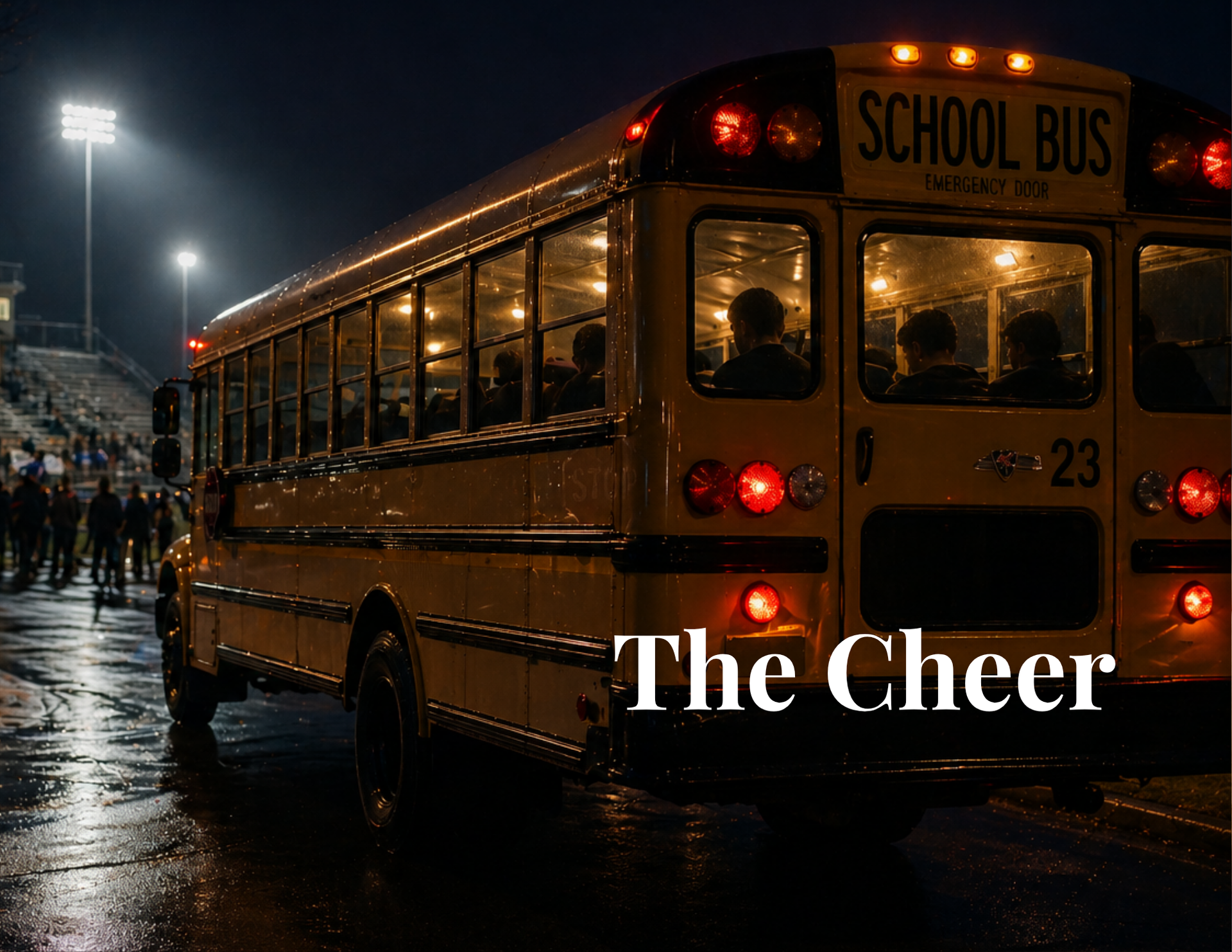
There is a word in the Hebrew Bible that appears more than 150 times, and we have never found an adequate way to translate it into English. The word is chesedh . We try. We use mercy, lovingkindness, steadfast love, and compassion. And every translation captures something true. But none of them capture everything. Because chesedh isn't just a feeling, an attitude, or even a virtue, it's the word the writers of Scripture used over and over again to describe the defining characteristic of God — the way God moves toward people, especially people who have no reason to expect it. And there is a related word, rahamim , which means something even more visceral. It comes from the Hebrew word for womb . It's the kind of love a mother has for the child she carried — not distant, or theoretical, but rather physical and active. It is a love that cannot stay still when the one it loves is suffering. That's what Jesus was talking about when He said, " Blessed are the merciful. " It’s not pity, and it’s more than just feeling sorry for someone from a safe distance. And it surely isn't just some kind thought sent in the general direction of someone's pain. Chesedh . Rahamim . It is a love that gets up and moves. Now imagine you are sitting on that hillside, the day Jesus said those words. You are not there because life is going well. You are there because you are out of other options, and something about this carpenter from Nazareth made you think — maybe. Just maybe He is the One. You are a fisherman with calloused hands who has been told your whole life that God is for the educated and the clean. You are a woman who has been publicly shamed and hasn't forgotten the faces of the people who did it. You are a tax collector who knows exactly what your neighbors think of you. You are a mother whose child is sick and who has been told, quietly and not so quietly, that this is what you deserve. You have heard religious teachers your whole life. You know how this usually goes. They tell you what God requires. But more than that, they like to remind you that you fall short. And they remind you again and again and again. So when Jesus says, " Blessed are the merciful, for they will receive mercy, " what runs through your heart? Probably not faith; at least not yet. Probably something closer to — so what? Nobody has ever shown me that. Why would I believe it now? And yet you stay. Something keeps you on that hillside. Maybe it's hunger. The rahamim kind — deep, desperate, from somewhere in your core. The longing for someone to finally mean it. In November 2008, a high school football team from Gainesville, Texas, took the field for what should have been just another road game. Gainesville State had fourteen players, wore seven-year-old pads and hand-me-down helmets. And they were winless with a 0-8 record. When Gainesville State arrived at games, they were escorted by security guards who removed their handcuffs before kickoff. You see, Gainesville State is a juvenile correctional facility. Their players are there by court order — drugs, assaults, robberies. Many of their families have disowned them. They play every game on the road, so there are no home crowds and no one is cheering their names. Their opponent that night was Faith Christian School — seventy players, eleven coaches, the latest equipment, and hundreds of involved parents. Before the game, Faith's head coach, Kris Hogan, sent an email to his fans. He asked them to do something unusual. Half of them, he said, would sit on the visiting side. They would learn the names of the Gainesville players. And they would cheer for them. When the Gainesville Tornados took the field, they ran through a banner that read Go Tornados. Two hundred strangers cheered their names. Faith's own cheerleaders led cheers for the opposing team. One Gainesville player said, “ We can tell people are a little afraid of us when we come to games. But these people, they were yellin' for us. By our names. ” Faith won 33 to 14. It didn't matter. Because at the end of the game, when the teams gathered to pray, a Gainesville player named Isaiah asked to lead. And this is what he prayed: “ Lord, I don't know how this happened, so I don't know how to say thank You, but I never would've known there were so many people in the world that cared about us. ” That is chesedh. You see, it’s not just feeling sorry for kids in a hard situation. It’s not writing a check from a comfortable distance. But it is about a large group of people who chose to get into the skin of fourteen young men who had never been cheered for and cheered for them anyway. And it changed Isaiah. You can hear it in his prayer. Something broke open in him that night that had never been open before. That is what mercy does when it is real. Isaiah didn't just feel better that night. For maybe the first time in his life, he felt what grace actually feels like, with skin on it. And you don't walk away from that as the same person. They will receive mercy. That crowd on the hillside didn't know what to do with that promise yet. But maybe — just maybe — some of them had felt something like what that young man Isaiah felt. The shock of being cheered for by people who had no reason to cheer. The disorientation of being treated like you matter by people who didn't have to. And maybe that's what finally made them believe it was possible. Chesedh doesn't always look like 200 fans on the bleachers. Sometimes it looks like a cup of cold water handed to a stranger who is thirsty. Doesn't seem like much and is often barely worth mentioning. But to the one drinking it — standing there parched, overlooked, and not expecting anything from anyone — that cup is the whole character of God made visible in one ordinary moment. That's the Unlikely Altar for this one. It isn’t some grand gesture or a stadium full of people. It is the moment when someone who has never been shown mercy receives it — and something in them shifts permanently. Blessed are the merciful, for they will receive mercy. Not because mercy is a transaction. Not because you give it and get it back like change. But because when you live chesedh — when you get into someone's skin and choose to move toward them instead of away — you find yourself swimming in the same love that has been moving toward you your whole life. Even when you didn't know it. Even when you were the one on the visiting side, wondering if anyone would ever cheer your name. May we know, may we remember, may we never forget — there is a love that will not stay at a distance. It has a Hebrew name we cannot fully translate. It comes from the womb. It moves toward the ones everyone else has written off. And somewhere today, in the most ordinary and unexpected moment, it is looking for a way to show up through you. Blessed are the merciful. Go cheer somebody's name.