
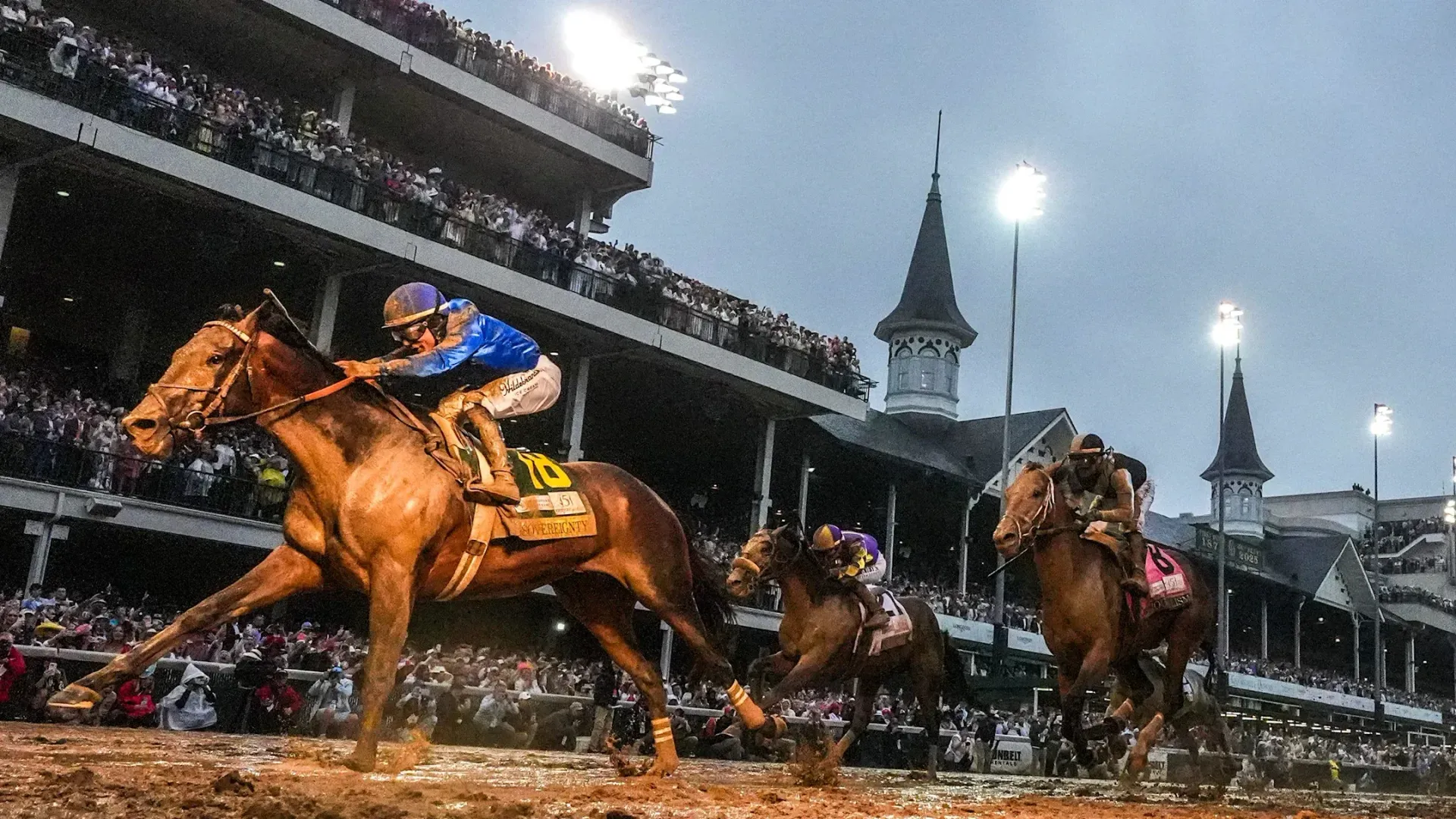
Just Another Saturday Night at the Races

Until It Wasn't

The Belmont Stakes usually comes with less noise.


Unless there’s a Triple Crown contender, it’s quieter. Fewer hats. Less hype. No trumpet fanfare announcing history in the making.


And maybe that’s exactly why it matters.


Because sacred doesn’t require spectacle. Sometimes, the altar isn’t at the front of the crowd, draped in roses, or blanketed in Black-Eyed Susans, or waiting for a crown of carnations. Sometimes it’s in the back row, in the shadows, in the space where no one’s keeping score or waiting for glory. Sometimes, holiness just looks like showing up.


If the Kentucky Derby is the grand stage—fanfare and fever dreams—and the Preakness is the scrappy sequel full of fight, then the Belmont, in years like this one, feels like a regular Saturday that most folks scroll past.

But that’s the unlikely altar, isn’t it?


Not the headline moment—just the kind that quietly holds the whole story together.


The Belmont was run anyway. And wouldn’t you know it—same result as the Derby. Same top three. Same come-from-behind winner who waited until the final stretch to surge past the leaders again.


There’s something sacred in that, too.


Because most of life isn’t Triple Crown moments. It’s ordinary time. Quiet faith. Long, slow miles when no one’s cheering. When you run not because the world is watching, but because the race is yours to run.


I watched the race while babysitting my granddaughter, who was making a glorious mess of the spaghetti I cooked just for her. Not a big night—just a full one. Full of sauce-stained joy, soft wonder, and a little magic spilled across the living room. And after she was tucked into bed, we raised a glass—not a mint julep or a Black-Eyed Susan, but a Belmont Jewel.


And that felt right. The Belmont Jewel has never been the star of the show. It doesn’t come with its own silver cup or folklore. It’s just bourbon, lemonade, and pomegranate. Unassuming. Refreshing. It shows up late in the season, after the crowds have thinned and the stakes have lowered. And yet, somehow, it’s exactly what the moment needed.


Maybe that’s the message of the Belmont itself:
There’s beauty—even blessing—in what gets overlooked.


And maybe that’s why Dan Fogelberg’s lyric landed hard again:
“The chance of a lifetime in a lifetime of chance.”


It’s not just about chasing big dreams—it’s about noticing small ones. The little flashes of grace that show up in spaghetti smiles, in late surges from behind, in ordinary days when no one’s paying attention. It’s about how sacred chances don’t always come with fanfare.


Sometimes they arrive like a whisper. Sometimes they’re handed to us in the form of a child, or a quiet evening, or a race that doesn’t seem to matter—until it does.


Because maybe the chance of a lifetime is simply the chance to live it.
To show up.
To keep running.
To keep loving.


Especially when no one’s watching.

By Where Christmas Shows Up After the Work is Done. December 20, 2025
Every December, the argument returns like a familiar carol sung a little too loud. Is Die Hard a Christmas movie? Some folks hold tight to their cocoa mugs and say, “ No way. ” Others smile the way you smile when the argument is already settled in your heart. I’ve come to believe the debate survives because it isn’t really about explosions or one-liners. It’s about where Christmas actually finds us. When I was preaching, Christmas was rarely quiet. Four or five services on Christmas Eve. Programs to assemble. Bulletins to proof. Candles to count. Microphones to fix. Holy night by way of logistics. I loved the people. I believed the message. But if I’m honest, there were years when I was just muscling through it all, trying to sound joyful while quietly counting the hours until December 26th. Not because I didn’t care. Because I was tired. Christmas had become something I delivered more than something I received. And then, late. After the sanctuaries were dark. After the last “ Merry Christmas ” was said. After the robe was hung back up. Die Hard would sometimes flicker onto the screen. No sermon. No sanctuary. Just a tired preacher on a couch watching a tired man crawl through air ducts, barefoot, scraped up, and refusing to quit. That’s when Christmas found me. First, the setting. Christmas Eve. Office party. Tinsel, teddy bears, and awkward small talk. The soundtrack includes sleigh bells and gunfire, which feels honest if we’re being real about the season. Love arrives on a plane. Redemption arrives barefoot. Second, the plot. A man flies across the country to fix a marriage. He brings a gun, sure, but mostly he brings humility. He learns to say the right name. He learns to ask for help. He learns that reconciliation costs something. If that’s not Advent, I’m not sure what is. Third, the theology of it all. Christmas, at its heart, insists that hope shows up where it shouldn’t. In a stable. In a cubicle farm. In a high-rise named Nakatomi. Grace breaks in during a holiday party and doesn’t bother to RSVP. This is why Die Hard feels like an altar to me. Not a cathedral altar with candles and quiet. An Unlikely Altar . The kind you stumble into while holding snacks. The kind that surprises you with meaning between explosions and one-liners. Because the movie isn’t really about violence. It’s about stubborn love. It’s about a man who keeps crawling through ducts because quitting would be easier, but it would be less faithful. It’s about choosing a relationship over pride. It’s about saying, “ I was wrong, ” and meaning it, even when the building is on fire. And yes, there is a Christmas miracle. Snow falls in Los Angeles. Paper snow, but still. A family is restored. A villain falls. A limo driver gets a tip. The season delivers what it always promises: not perfection, but presence. So, light the tree. Pour something festive. Put Die Hard on the screen and let it preach. Let it remind you that Christmas shows up loud and sideways, that love sometimes limps, and that grace can absolutely wear a tank top. An Unlikely Altar. A Holy night. Yippee-ki-yay, AMEN! 🎄💥
By Written for Anyone Who Meant to Come Back to the Conversation December 19, 2025
I don’t know your name, but I know this moment. You opened the conversation. You hesitated. And then life stepped in. You know, that happens more often than you might think. I’ve sat at kitchen tables where someone said, “ We meant to do this .” I’ve stood beside families who whispered, “ They kept saying they’d get to it. ” I’ve watched love carry grief—and then watched grief carry bills, decisions, and questions that felt impossibly unfair. This isn’t a letter written to rush you. It’s written because I’ve seen what happens when no one ever circles back. I once stood with a family the morning after a death. The house was quiet in that way only grief can make it. Coffee untouched. Phones buzzing with questions no one wanted to answer yet. Someone finally asked, “ Is there anything in place? ” But there wasn’t What followed wasn’t just sadness. It was scrambling. Credit cards. Awkward conversations. A weight added to a moment already heavy with love and loss. But there are those times when I have seen another scene. I’ve been with families where one small thing was already taken care of. Not everything. Just enough. And in those rooms, grief was still heavy—after all, love always makes it heavy—but it wasn’t tangled up with panic or uncertainty. That’s why this matters to me. Not because I sell final expense insurance. But because I’ve watched what happens when love prepares the way—and when it doesn’t get the chance. If you paused because the conversation felt heavy, I understand. If you paused because life got loud, I understand that, too. If you paused because you told yourself, “ I’ll come back to this ,” I’ve heard that sentence more times than I can count. This isn’t about fear. It’s about care. It’s about peace. It’s about love. Final expense planning isn’t about planning your death. It’s about caring for the people who will still be here when you’re gone. It’s about making sure grief doesn’t have to carry more than it already will. Love will always make grief heavy. A plan simply keeps other burdens from piling on. If you never come back to this conversation, I hope you still hear the heart behind it. And if someday you do return, I hope you know the door was always open. Because this work—this quiet, unseen preparation—is one of the last ways love shows up. And that is no small gift.
By Because Grief is Heavy Enough… December 16, 2025
The service is over. The thank-you notes have been started. The flowers are starting to fade. Most of the company has travelled home. And the casseroles are stacked in mismatched containers, names written on blue tape. This is what the day after looks like. It’s the morning when the house is too quiet. When the adrenaline wears off. When everyone else has returned to their lives, and you are left standing in the middle of a room, wondering what happens next. Because grief is heavy enough. Not only is the day after quiet, but it is also the kind of silence that invites questions. And those questions can overwhelm you. Who do we call now? What needs to be paid? Is there insurance? Where is the paperwork? What did they want? These questions don’t come because people are being practical. They come because love is trying to keep going in the middle of loss. And because grief is heavy enough, those questions can feel overwhelming. I’ve spent years standing with families in these moments. As a pastor. As a celebrant. As someone who knows that the hardest parts often come after the service ends. I’ve seen families gathered around kitchen tables, coffee gone cold, paperwork spread out in quiet confusion. I’ve also seen something else. I’ve seen what happens when one small thing is already taken care of. Not everything. Just one thing. A simple plan. A clear answer. A quiet assurance that one question does not have to be asked today. Because grief is heavy enough without financial questions layered on top of it. When that piece is in place, something shifts in the room. Shoulders soften. Breathing slows. People are allowed to be exactly what they are in that moment— sad, tired, grieving, human. Final expense planning doesn’t take away grief. Nothing does. But it can take away one weight that doesn’t belong there. Because grief is heavy enough on its own. Planning ahead is not about paperwork or policies. It’s about peace. It’s about leaving behind one less burden for the people you love. It’s about making sure the day after holds space for tears instead of tension. If you’ve ever thought, I should probably take care of this someday, you’re not being morbid. You’re being loving. Because grief is heavy enough. Love will always make it heavy. Planning ahead just keeps other burdens from piling on — so families can grieve without also having to guess. And that is no small gift. If you’d like to talk about what planning ahead could look like for your family—without pressure and at your pace—I’m always here for that conversation. Breathe peace. Marty